
 Advanced Integration Technology > Automation & Integration > Automation & Integration Projects
Automation & Integration Projects
For more than 20 years, AIT has been building the future of aerospace. Automation and integration are the lifeblood of our business, setting the course of progress to develop new technologies based on the customer need or dream.
C919 Automated & Integrated Final Assembly
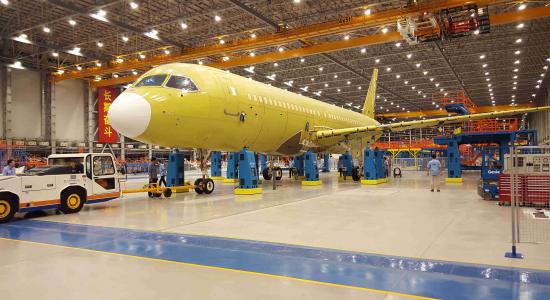
AIT designed, developed, and installed the integrated, automated final assembly line in Shanghai, China, for the COMAC C919 single-aisle regional aircraft.
The C919 final assembly process comprises five major work stations. Components from different manufacturers are brought into the factory from locations all over China and then assembled to create the C919 airplane. The assembly line accommodates three different variants in airplane length while maintaining the airplane assembly process integrity. Depending upon the version of airplane to be produced, the work cells can be easily reconfigured to meet these flexibility challenges.
Tools and equipment ranging from simple fixtures to complex alignment and positioner systems carry out the assembly tasks. Ergonomics, space reduction, and lean manufacturing techniques are paramount and were implemented during the design process.
- Cell 1 - Work platforms give access to the nose section from inside the cabin floor, while transportation dollies move and support the nose section.
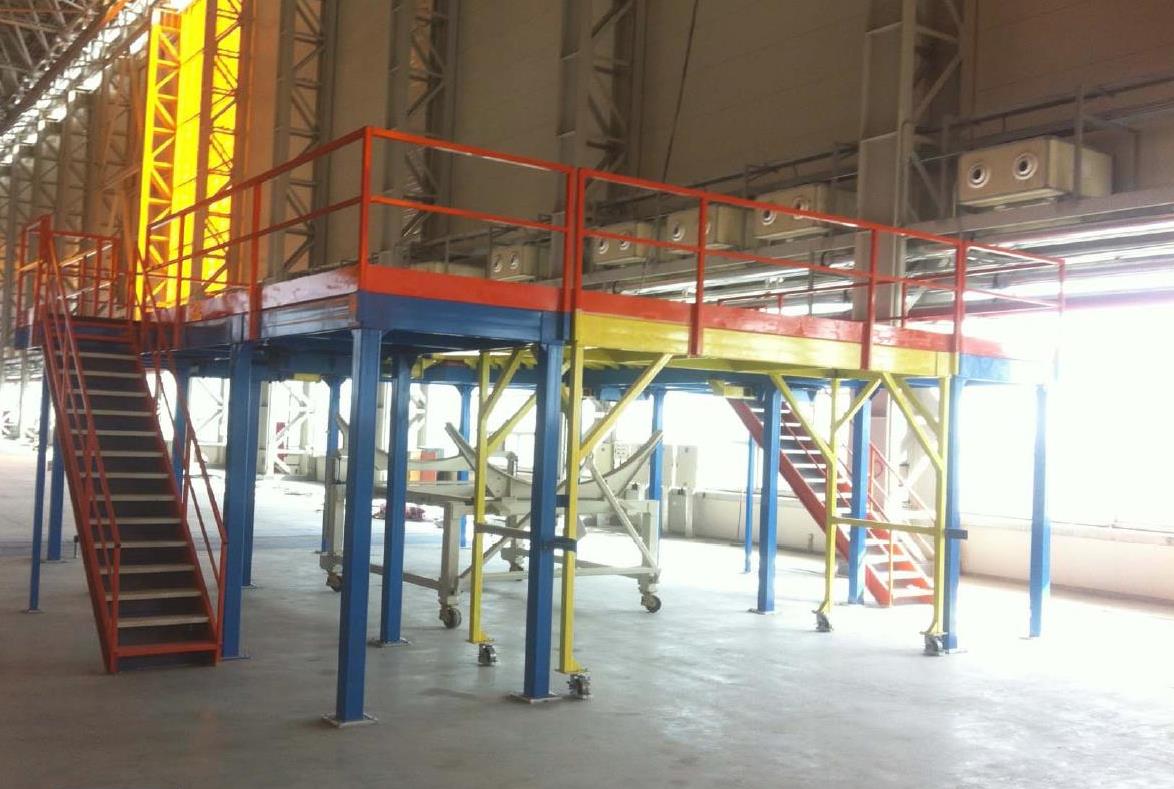
- Cell 2 - Wing transportation dollies support each wing for assembly.
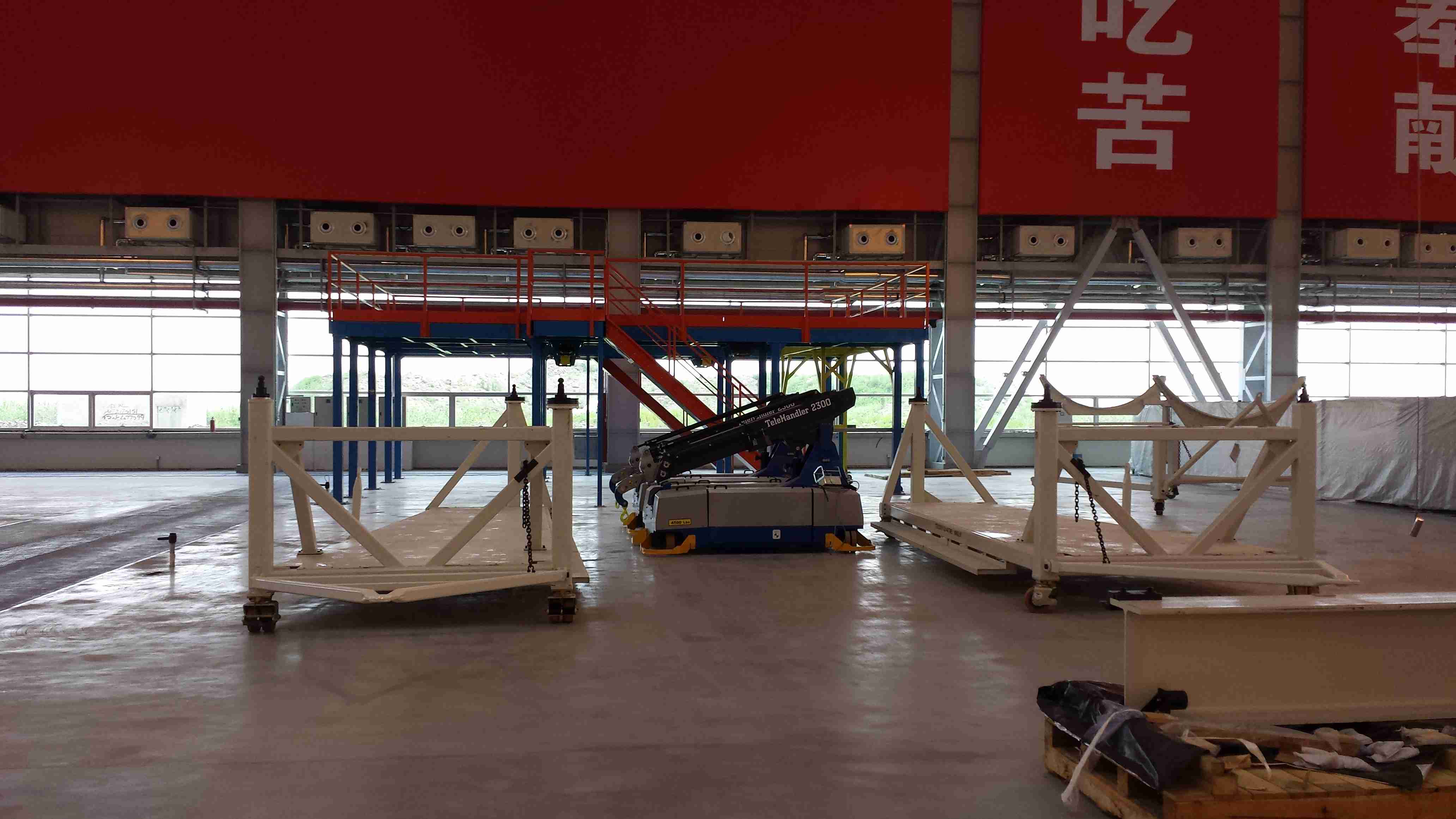
- Cell 3 - AIT systems measure and automatically position the three major sections of the rear fuselage using laser alignment technology.
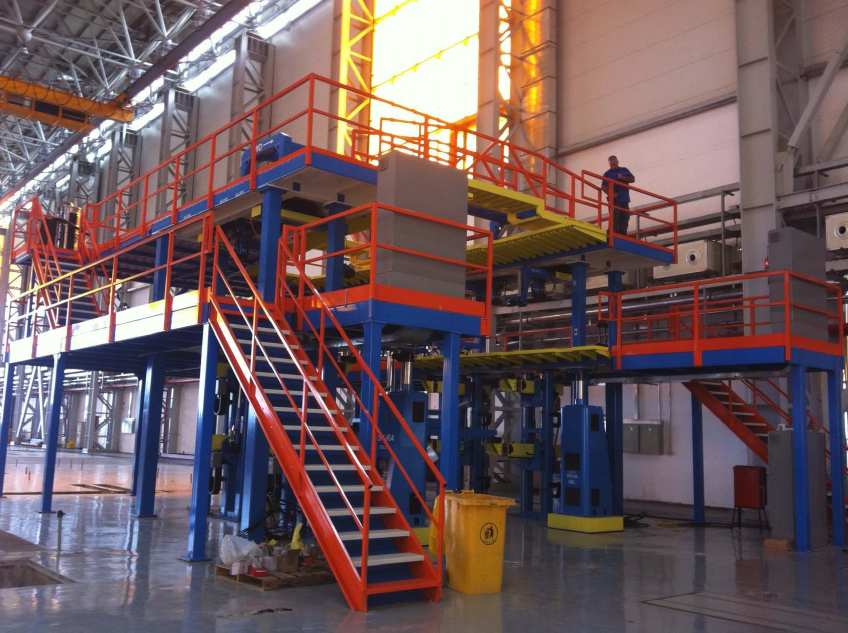
- Cell 4 - AIT systems measure and automatically position the four major sections of the rear fuselage using laser alignment technology.
- Cell 5 - The AIT automated system measures and automatically positions the wings and HTP/tailcone to the fuselage using laser alignment technolgy.
Boeing 787 Final Assembly Integrator - Second Line, Charleston, SC
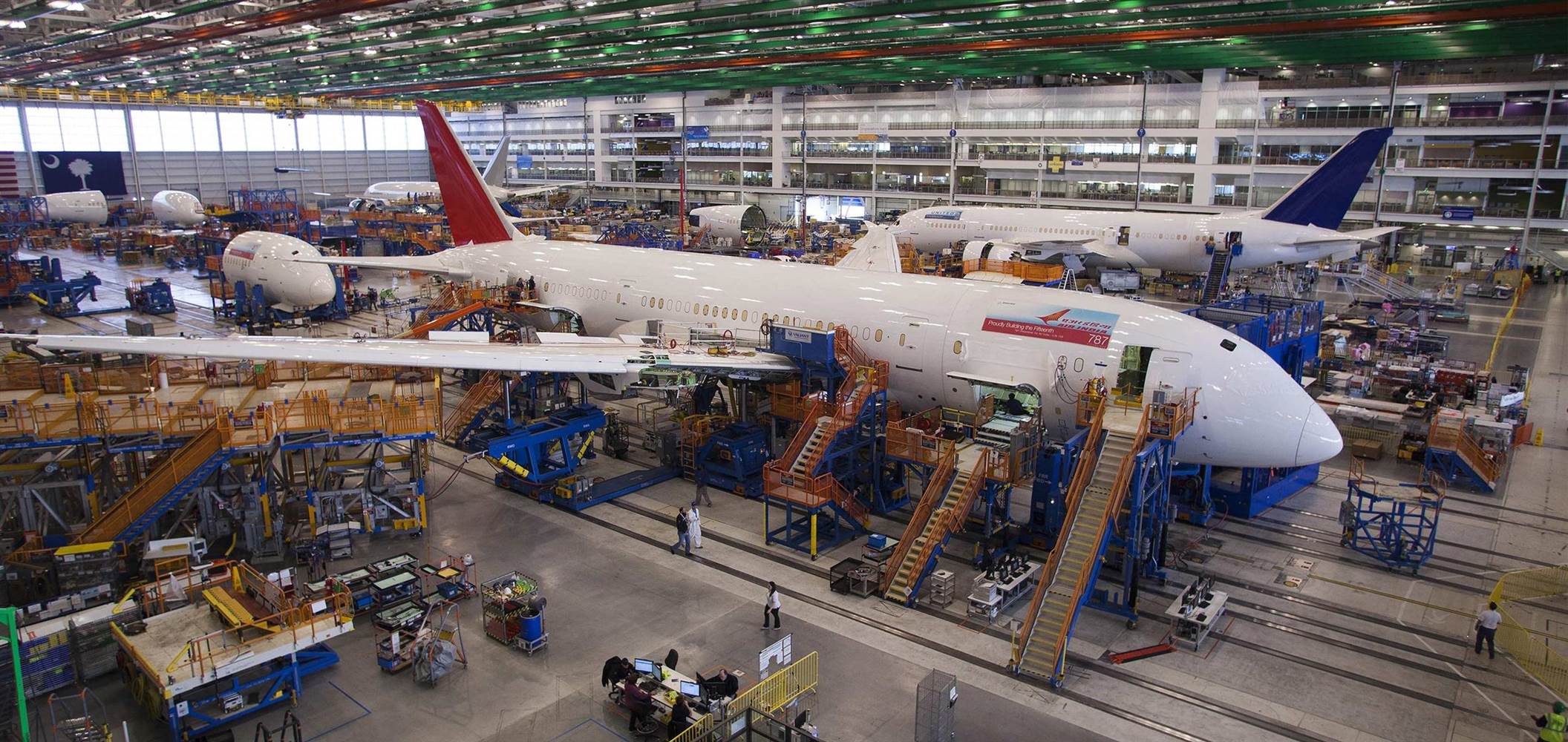
Because of its success with the first FAL in Everett, Boeing contracted AIT to be its prime integrator for its second 787 assembly line in Charleston, SC. This system features AIT's proven automated positioning systems for Positions 1 and 2 to assemble the fusleage, wings, and empennage. Also featured are our Flex Track drillers and material movement solutions.
Learjet L85 Final Assembly Integrator
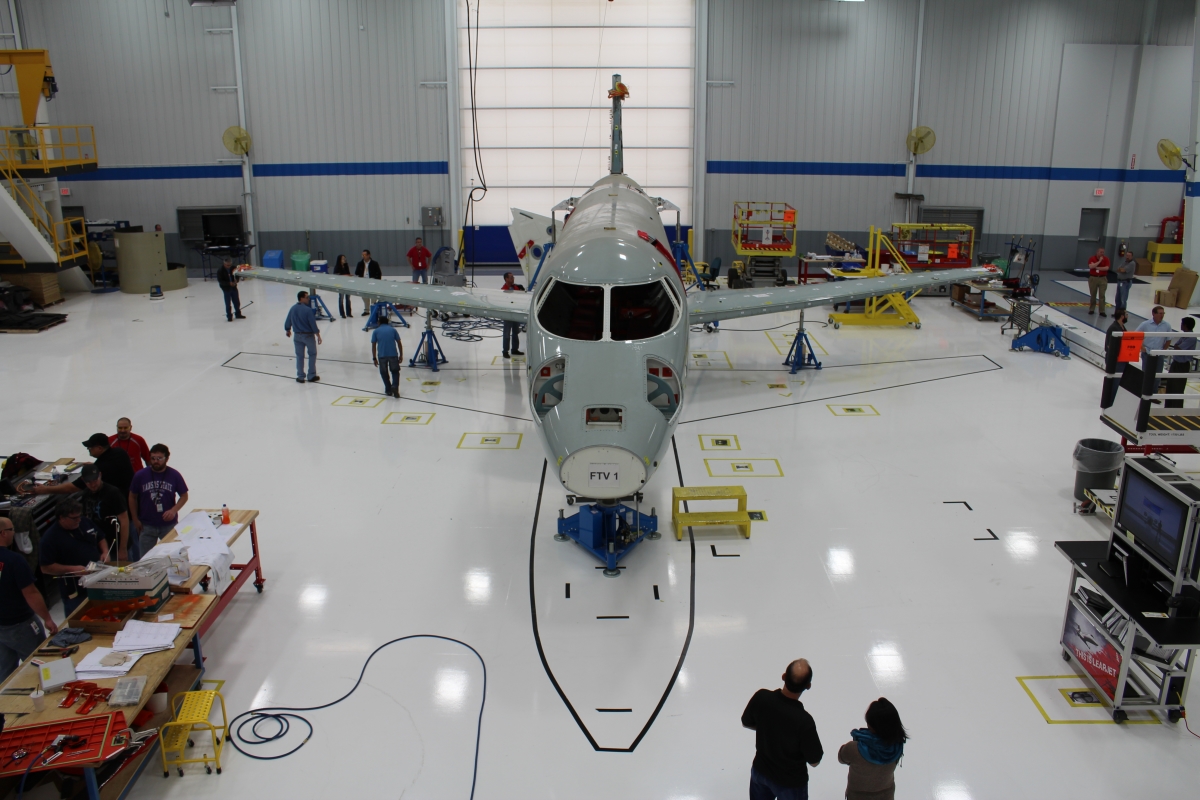
AIT was selected by Bombardier to design and fabricate bond molds, assembly jigs, and factory automation tools for the Learjet 85 program in Belfast, Northern Ireland; Queretaro, Mexico; and Wichita, Kansas. The Learjet 85 business jet utilizes substantial carbon fiber in much of the airplane structure, and AIT developed approximately 2,500 tools from carbon fiber and aluminum to produce details and to assemble flight component details.
Belfast, Northern Ireland
AIT produced the carbon fiber and Invar tooling for the Resin Transfer Injection (RTI) process that Bombardier in Belfast utilizes to produce near matched molded carbon fiber wing components including the one piece wing planks. These sophisticated molds produce very repeatable carbon fiber structural components and AIT worked closely with Bombardier to design and fabricate the molds to exacting specifications. These components are then sent to Queretaro for assembly in jigs fabricated by AIT.
Queretaro, Mexico
Bombardier in Queretaro utilizes Out-of-Autoclave (OOA) processes to fabricate carbon fiber components for the fuselage and empennage. AIT designed and fabricated the bond molds for the OOA processes that are used. The forward and aft fuselage sections are built with very large complex multi-piece molds that require assembly and disassembly for each one-piece fuselage section. AIT designed and built tooling that provided a means to do the assembly and disassembly manually in a short schedule window so that fuselage barrel development could occur while an automated machine could be built and installed. AIT designed and built the automated mold assembly and disassembly cell in addition to a fuselage mold rotation cell used to facilitate the fabrication of the one-piece carbon fiber fuselage sections.
AIT concepted designed and built a wide variety of jigs and fixtures used to locate, drill and assemble detail parts to meet specification and rate requirements. Drill plates, subassembly and final assembly jigs are used to assemble small assemblies to assembling complete fuselage sections. Many of these jigs take into account the unique factory material handling needs including the nose cone-to-fuselage join jig.
Wichita, Kansas
Final assembly of the Learjet 85 takes place in Wichita, Kansas. In addition to developing the tooling for these above pre-final assembly locations, AIT also served as Bombardier’s prime project integrator to develop methodologies, designs, and positioning systems to join major components coming from these satellite locations, including:
- Empennage to aft fuselage
- Aft fuselage to forward fuselage
- Wing to body
Each of the joins requires advanced integrated positioning systems, which include:
- Fuselage transportation dollies
- Fuselage stands
- Pylon jacking stands
- Wing positioning sled
- Wing transportation dollies
- HSTAB transportation dollies
- Ballast tools installation of Nose and Engine
- PAX stairways
- PAX mezzanine
- Empennage Platform
- Overwing Entry stairs
- Moving Line Tugs (MLTs)
Boeing 787 Final Assembly Integrator - Surge Line, Everett, WA
Boeing activated its surge line in Everett to help the airframer meet its production rate of five aircraft per month from all three assembly lines and to introduce the 787-9 into the system. AIT was again selected as the prime integrator and automated tooling provider for this final assembly line.
Boeing 787 Integrator Section 47/48 - Charleston, SC
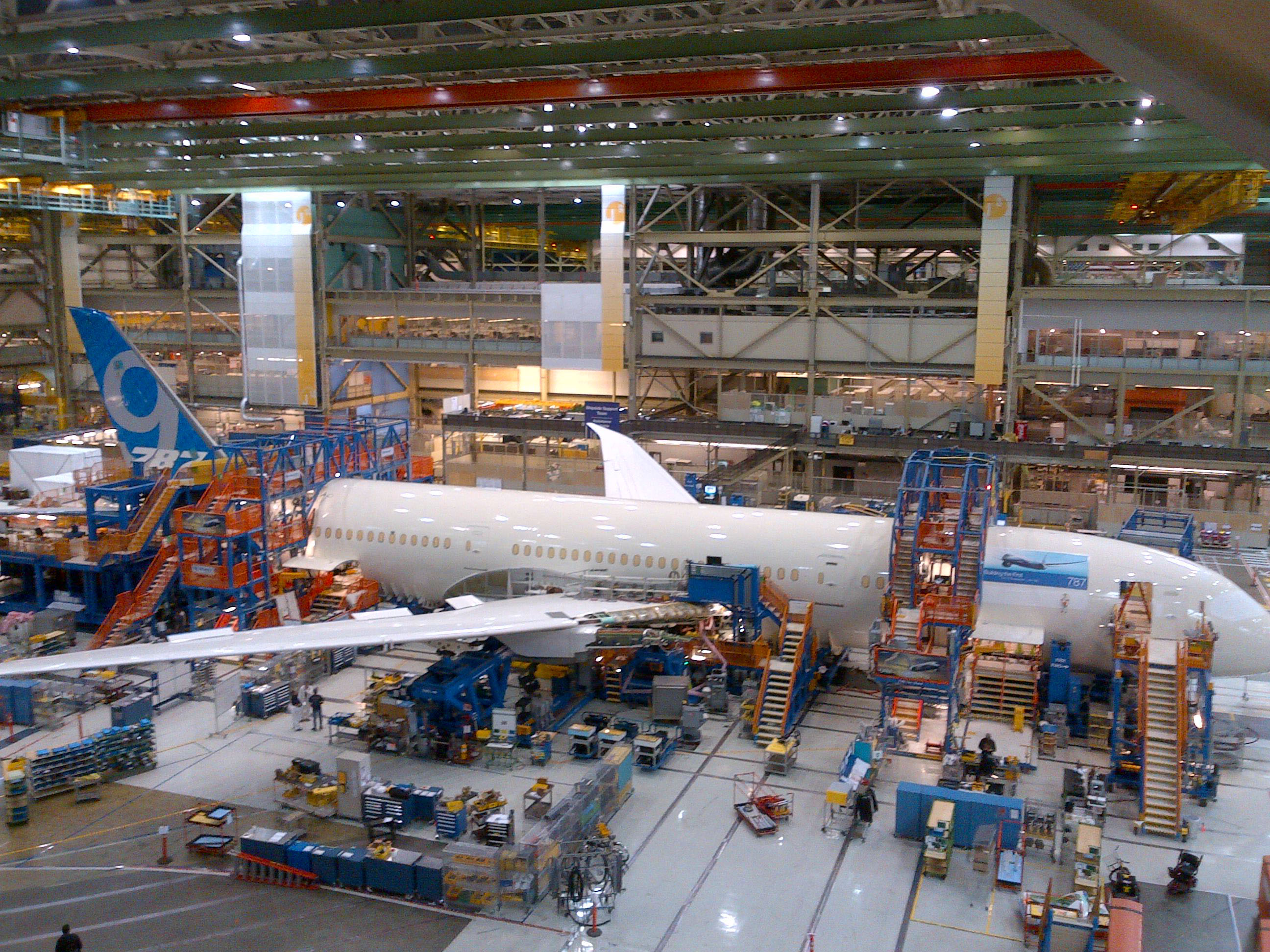
Not only did AIT work with Vought (now Boeing) to design a new factory flow for the 787 in Charleston, SC, but we also served as the Total Project Integrator for the 22-foot wide aft fuselage Section 47/48. In this context, we defined an entirely new process to build the aircraft in the 342,000-sqaure-foot building – substantially raising the bar in streamlined, economical manufacturing. The new layout included 16 fabrication and assembly cells to accommodate the Section 47/48 manufacturing process. AIT worked closely with Vought to ensure this massive undertaking was integrated with precision.
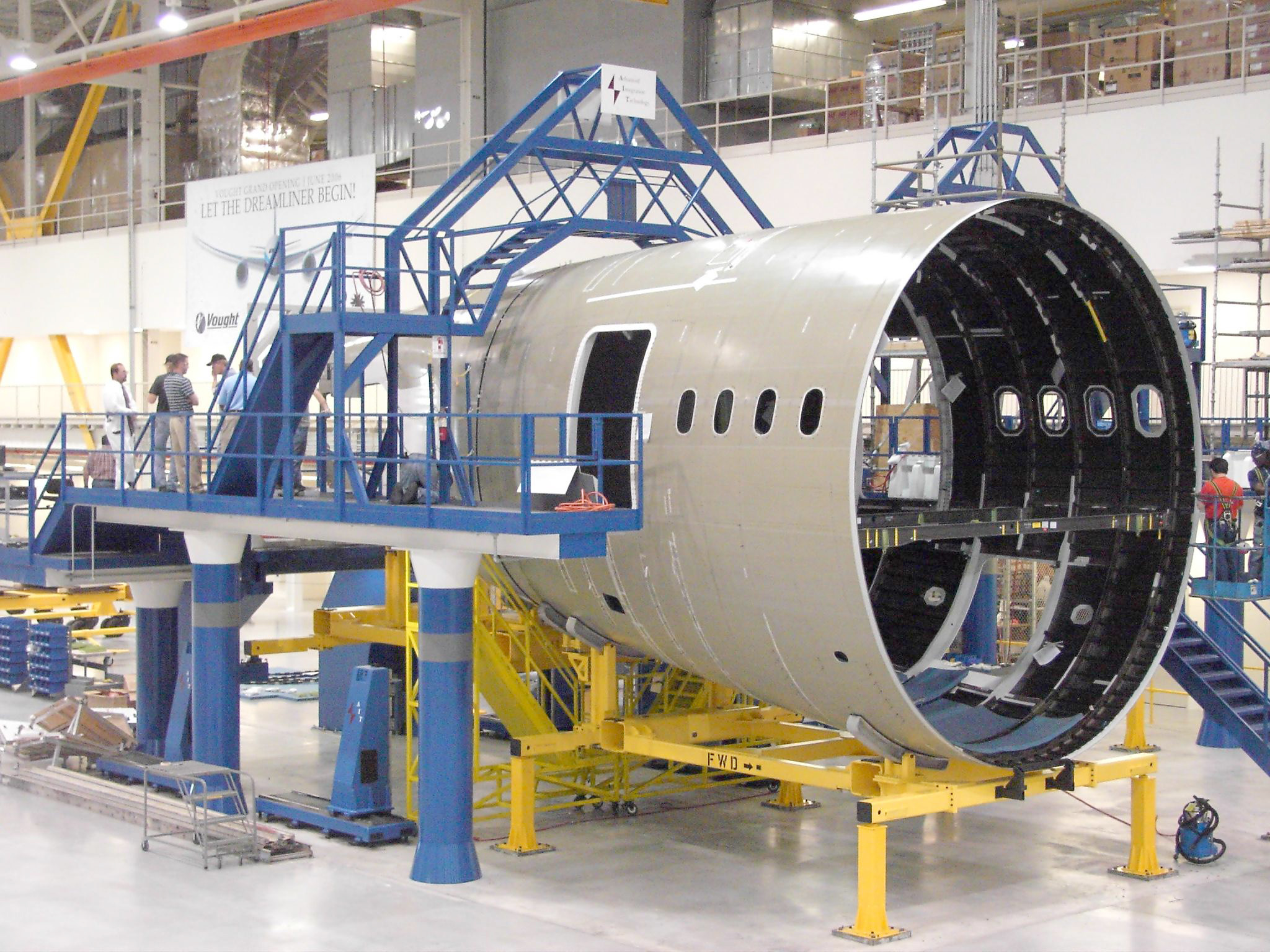
Boeing 787 Systems/Facility Integrator Section
As their facility integrator, AIT worked with Global Aeronautica (now Boeing) to design the factory flow of their new 334,000-square-foot building, where they integrate, test, and apply surface finish to more than 60% of the 787 fuselage.
AIT served as facility integrator for the mid- and aft-body joins assembly lines, which encompassed joined Sections 43, 44, 45/11, 46 with Section 47/48. The integrator scope for the assembly line included seven separate positions, each with individual system integration components and transportation between. In its role, AIT provided turnkey integration, support, capital equipment, and automation for the entire process.
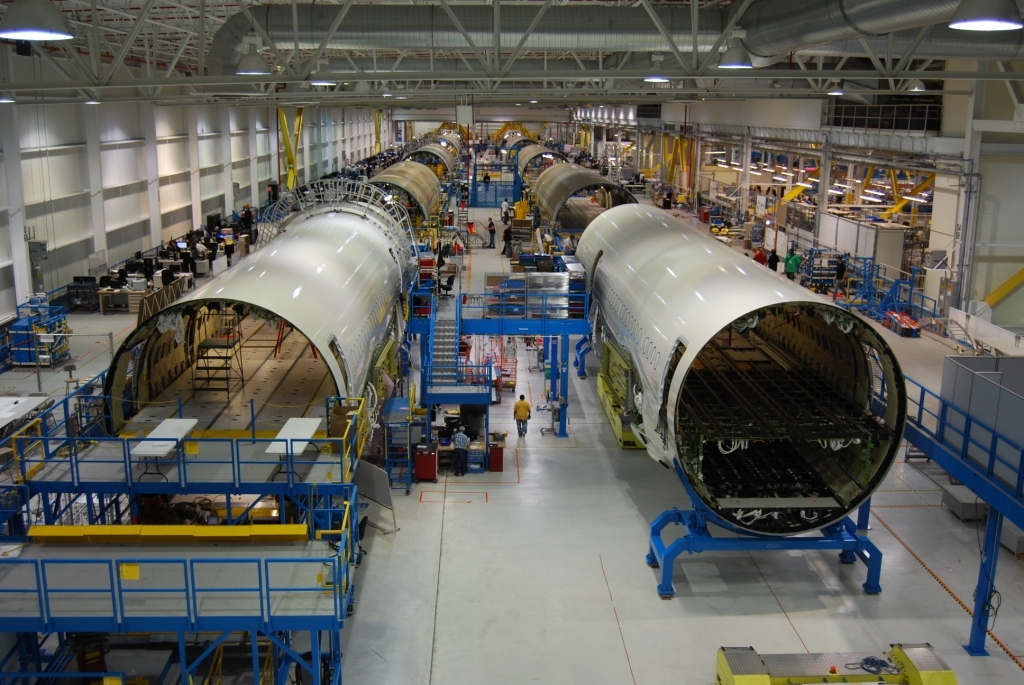
As sole supplier, AIT was engaged for two separate projects with Global Aeronautica. For the first project, AIT was the prime contractor/integrator to design, fabricate, and install the 787 Dreamliner automated flexible positioning and assembly system used to join the Section 45/11 (center wing well and center wing box) mate to Sections 43, 44, and 46 (forward and center fuselage sections, 19’ diameter and 84’ long when joined). As their facility integrator, AIT also worked with Global Aeronautica to design the factory flow of their new 334,000-square-foot building, where they integrate, test, and apply surface finish to more than 60% of the 787 fuselage. As such, AIT served as facility integrator for the mid- and aft-body joins assembly lines, which encompassed joined Sections 43, 44, 45/11, 46 with Sections 47/48. The integrator scope for the assembly line included seven separate positions, each with individual system integration components and transportation between. In its role, AIT provided turnkey integration, support, capital equipment, tooling, and automation for the entire process.
- Delivered automated flexible positioning and assembly system to join Sections 45/11 with Sections 43, 44, and 46
- Include automated transfer dollies and integrated work platforms
- Measure key features on four section assemblies for precise alignment
- Position accurately with feedback from integrated Laser Trackers
- Served as facility integrator for mid- and aft-body (Sections 43, 44, 45/11, 46, 47, 48) join assembly lines
- Provide components for major barrel join, under wing and over wing system integration, as well as fairing and continued over and under-wing installations
- Provide systems install for Sections 47 and 48, and systems install for both mid- and aft-bodies
- Utilized automated circumferential and side of body drilling machines
- Drill upper portion of fuselage sections
Advantages
- Substantially reduce labor costs
- Streamline assembly line process
- Improve quality with laser tracking and in-process quality check
Bombardier CSeries Final Assembly Line
For the CSeries, Bombardier embarked on a new automated methodology to build its new single-aisle aircraft, naming AIT as its automated integration expert. For the assembly of this aircraft, AIT was contracted to develop several systems in mutliple worldwide locations.
Cockpit Assembly
The cockpit assembly in Saint-Laurent comprises fixture, transport, and support tools for assembly of the cockpit before being joined with the forward fuselage in Mirabel.
 GET OTHER IMAGE!!!
Forward Fuselage Assembly
AIT developed four multi-product systems to build and assemble the forward fuselage section of the CSeries in Mirabel. The fuselage panels enable skins to be applied to individual sections and those to be manipulated or moved for drilling or other work before being assembled into the forward fuselage barrel.


Final Assembly Line (FAL)
For the FAL, AIT delivered three Automated Assembly Systems that join the forward, rear, and aft fuselages to the center fuselage, as well as the wings to the center wing box. The AIT systems include a combination of fixtures and automated alignment positioners for the final assembly and subassemblies, such as fuselage sections, wings, engines and fairings, through three automated assembly stations in the FAL. Also included with this system are two engine loaders as part of the assembly process.
For final assembly, all sections are delivered into the cell individually on fixtures by AGVs. The fuselage fixtures/assembly jig positioners are indexed to the floor while the wing positioning machines lift the wing support beam and move the wings to a pre-join staging position. The subassemblies are then automatically aligned to each other creating the completed structure.


Hawker Beechcraft Hawker 4000 Rate Mate Tool
AIT was selected by Hawker Beechcraft to provide the AIT Mate Tool and Flex Track circumferential drillers for assembly of their new Hawker 4000 aircraft.
The tool incorporates an automated laser-alignment system comprised of eight positioners for precise positioning of fuselage sections for final assembly. To support the fastening process, AIT is providing two Flex Track circumferential drilling systems for complete access around the circumference of the aircraft thus enabling precision drilling at each fuselage joint. Also included as part of the tooling package are platforms for access to the sides of airplane fuselage (one fixed, one moveable), a calibration station to support the drilling operations, as well as an empennage lifting fixture and internal and external pressure rings for holding the joints during final fit and fastening operations.
This super mid-size business jet is the largest aircraft in the Hawker family and features an all-composite fuselage, which includes graphite/epoxy laminated material and honeycomb sub-structure. The Hawker 4000 fuselage is built in three large sections and assembled in its manufacturing facility in Wichita, Kansas.
Project Features
- AIT prime contractor/integrator - sole supplier to Hawker Beechcraft
- Automated join tool with eight positioners using laser alignment
- Two circumferential drilling systems
- Two platforms for access to fuselage
- Flex track drilling machine calibration stand
- Empennage lifting fixture


Lockheed Martin F-35 JSF Final Assembly and Integration
With an aging fleet of fighters, the U.S. Department of Defense (and other international partners) needed a new next-generation, multi-role fighter that was as affordable as it was lethal. The resulting F-35 Joint Strike Fighter (JSF) contract was awarded to Lockheed Martin, in Fort Worth, TX, who called on AIT as their Prime Contractor to deliver an automated Electronic Mate and Assembly System – or EMAS. To date, AIT has developed and installed a total of 20 systems in Fort Worth, Italy, and Japan.
Achievements
- Met affordability challenge with AIT technology, integration, and equipment
- Supporting three aircraft variations, significantly reduced labor and equipment costs with its flexible assembly automation
- Delivered superior quality in final assembly by successfully integrating Laser Tracker technology
- First test plane close to that of a production quality aircraft
- "Stealth signature" of aircraft maintained with clean lines
- Accelerated speed to market and military advantages from curtailed cycle and ramp-up times
Electronic Mate and Assembly System
AIT developed its Electronic Mate and Assembly System to perform the final mating of the JSF forward, center, and aft fuselage assemblies as well as the wing assembly. Its engineers designed the assembly stations with the flexibility to mate the three F-35 variants called for in the contract: the F-35A, F-35B, and F-35C, each manufactured for specific uses by the military. With three variations being assembled on the same line, the goal of affordability was easily met because tooling costs for each aircraft were eliminated.
Quality construction was also critical to the cost-containment objectives set by the DOD. Two major factors contributed to the superior quality and processes in the F-35 assembly:
- Laser Trackers in the AIT EMAS guided the positioners into a precise mating configuration for each aircraft component.
- EMAS software mated the components in a virtual space before the actual physical mating occurred.
Because of these incredibly accurate automated measurements, the assembly schedule was also reduced, resulting in additional time and cost savings. In fact, the first test plane boasted near-production quality and its required "stealth signature."
The F-35 JSF project was the first at Lockheed Martin’s Fort Worth facility to employ this type of automated system. AIT technology helped accomplish the U.S. DOD’s overall goal of creating the most advanced stealth fighter to date while reducing costs and achieving affordability.
Our expert coordination equates into a competitive advantage in time to market and cost containment for our Aerospace partners.
System Features
AIT designed all of the technology incorporated into the EMAS to increase the speed of production and improve quality. Using state-of-the-art technology, laser tracking, and planned Indoor GPS, the EMAS facilitated aircraft alignment join by precisely locating parts and controlling aircraft geometry.
- 16 positioners
- Included 3 integrated Laser Trackers each
- Automatically measured key features to ensure precise alignment
- Confirmed tolerances before errors occurred[align copy vertically on sub-bullets]
- 4 major subassemblies (forward, center, aft, wings)
- Specialized control and graphical user interface (GUI) software
- Software allowed operator to assign weights or alignment priorities to measured points
- User friendly GUI.
Each positioner, effectively a three-axis machine, functioned to support the F-35 JSF subassemblies and smoothly move them in a linear fashion as well as rotationally. The use of lasers allowed for real-time measurements to confirm tolerances and validate design, leading to a more efficient, rapid, and accurate procedure. This improved method of assembly was controlled through the use of the GUI and/or joystick, making the system exceedingly user friendly.
The flexible, automated systems provide faster tool setup times, faster positioning of assemblies, and fewer hard tooling reconfigurations than conventional tooling – all benefits to Lockheed Martin and the military.
Project Highlights
- AIT Prime Contractor/Integrator - sole supplier to Lockheed Martin
- Total of 5 assembly lines
- Positioning of 4 major subassemblies for final assembly
- 16 positioners with specialized controls and graphical user interface software
- Assembly positioning accomplished by Laser Tracker feedback
- AIT technology improved fuselage quality and sped production > 4,000 backlog


Boeing 737 NG Final Body Join Alignment Systems
The most-produced commercial passenger jet in the world, the Boeing 737 is a short- to medium-range, single-aisle, narrow-body jet airliner. To remain competitive in the marketplace with this popular aircraft, Boeing launched the 737 Next Generation (NG) series in the mid-1990s. Boeing focused on its goals of speeding production while maintaining its superior fuselage quality for the five different models.
To help achieve these objectives, Boeing selected AIT as its prime contractor/integrator to provide turnkey laser alignment systems for the 737 final body join.
The AIT alignment system measured and automatically positioned major fuselage components during the final assembly process. In these systems, articulating lasers and airplane-mounted passive targets were used to measure positions and orientations of four fuselage sections relative to the wing stub section. Operators at the console observed the position data and actuated section moves using the touchscreen. The control system performed coordinated linear and rotational moves in and about all three airplane axes, utilizing servo positioning.
AIT provided state-of-the-art controls while directing mechanical, electrical, and panel fabrication subcontractors in the delivery of seven identical tools.
Project Features
- AIT Contractor/Integrator
- Sole Supplier to The Boeing Company
- Positioning of 5 fuselage sections for final join
- Capable of building 5 different models
- 7 final assembly tools
- 140 positioning machines
- 200 axes of servo motion
- Provides technology to speed production
- Provides technology to improve fuselage quality


Boeing 747 FAIT Automated Alignment System
In the mid-1990s, The Boeing Company sought to become more competitive in the commercial airplane marketplace by improving its manufacturing capabilities, while reducing overall production costs. This bold goal resulted in the fuselage assembly improvement team (FAIT), a new technique to completely assemble the 747 fuselage by “snapping” together panels. Together with another earlier ‘90s initiative – accurate fuselage assembly (AFA) – Boeing’s ultimate objective was to achieve a significant cut in assembly flow time over the next several years.
To meet this challenge, Boeing selected AIT in 1999 as their prime contractor for the 747 FAIT Automated Alignment System.
As the Prime Contractor/Integrator, AIT provided a full range of deliverables, including the design, fabrication, installation, test, commissioning, training, and program management for this automated system. For the 747, this entailed two or more panel assemblies being joined together and mated to frames to form even bigger assemblies. Additionally, the system needed the flexibility to build the four required 747 variations: freighter, passenger, and combination models as well as the updated 747-8.
The scope of the AIT project involved automating the measurement and positioning of major structural subassemblies in the Sections 42 and 46 lower lobes and Sections 41/42, 44, and 46 major assembly areas. To accomplish this, AIT used integrated rotating lasers within the positioners to measure section positions relative to the fixed tool targets.
The AIT FAIT automated alignment system included 13 automated fixtures composed of over 200 positioners and approximately 700 axes of servo motion – all under the control of RTCs, AIT's graphical operator interface, mobile joystick, and mobile GUI pendants. Because of its ease of use, AIT equipment enabled the sections to be automatically aligned with the touch of a button.
Innovative Technology
AIT worked with Boeing to develop Determinant Assembly, a new method of indexing parts that simplified the way the aircraft could be put together. The new assembly process ensured commonality of work, which is more adaptable to "lean" manufacturing principles because it uses part-to-part indexing, rather than a conventional part-to-tool indexing system.
The Boeing Company and AIT, as prime contractor, developed and installed automated positioning systems throughout 747 fuselage assembly areas that enabled Determinate Assembly techniques.
Benefits
- Flexibility in assembly tooling with reduced variability between requirements for three aircraft variations
- Assembly accuracy with no panel mismatching
- Ease of assembly and associated speed
- Reduced downtime for tooling maintenance
- Improved shop floor ergonomics
Project Features
- AIT Integrator/Prime Contractor - sole supplier to Boeing
- Automated panel manipulation in 2 Lower Lobe assembly tools
- Automated panel manipulation in 3 major assembly tools
- 13 automated assembly fixtures
- 200 positioners
- 700 axes of servo motion
Achievements
- Met Boeing’s reduced assembly time goal with new Determinant Assembly process
- Instituted laser tracking and part-to-part assembly technology to implement improved manufacturing capabilities and reduced production costs
- Automated the control of over 50 end-effectors in a 15ft x 15ft x 75ft volume


CASA DO728 Wing Assembly - San Pablo, Spain
AIT was the prime contractor/integrator to design, fabricate and, install the DO728 Automated Wing Assembly Tooling at CASA's San Pablo facility near Seville, Spain. The facility includes an automated wing alignment and join tool that incorporates AIT-designed lasers and targets, together with wing transportation dollies and associated tooling including drill jigs.
The tooling allows for rapid alignment of the wings for drilling and other operations, separation for clean and debur, and re-alignment for fastening as well as rapid transport of the wings between holding fixtures, and rapid disassembly of the wing for shipping. The system was put into production in July 2001.
Project Features
- AIT prime contractor/integrator - sole supplier to CASA
- Automated wing alignment and join tool
- Automatic transport of wing assembly between stations
- AIT designed lasers and targets
- All automation and tooling including drill jigs provided by AIT
- Rapid wing alignment for drilling and other operations
- Rapid disassembly of wings for shipment


Fairchild Dornier 528, 728, 928 Final Assembly
AIT was the prime contractor/integrator to Fairchild Dornier to design, fabricate, and install the 728 and 928 jet final assembly line tooling in Oberpfaffenhofen, Germany, near Munich. The tooling included automated systems used for fuselage center section assembly, fuselage final assembly and wing join assembly as well as transportation vehicles, jacking and leveling systems, work platforms, logistic scaffolding, and lifting fixtures.
Each of the automated assembly fixtures incorporated AIT laser systems to measure positions and orientations of different aircraft assemblies during the joining process. The flexibility of the systems allowed them to build any of the three aircraft models.
Project Features
- AIT prime contractor/integrator - sole supplier to Fairchild Dornier
- Automated fuselage center section assembly
- Automated positioning of fuselage assembly and wings for final assembly
- Work platforms, scaffolding, and auxiliary tooling
- Capable of building 3 aircraft models: 528, 728 and 928
- 65 machines with 115 axes

