
 Advanced Integration Technology > Automation & Integration > Material Movement > Overview
Material Movement
Ultimate flexibility is a premium when it comes to maneuvering on a plant or factory floor during the aircraft manufacturing process. And AIT’s mobile material handling solutions – customized to a customer’s exact requirements – are designed with the maneuverability needed to transport and position any precision tooling, assembly equipment, people, and large structures.
Our solutions integrate seamlessly with your current facility or can be designed specifically for a new site. Additionally, our solutions are scalable for future expansion requirements and increased production capacity.
Material Movement Projects Sample List
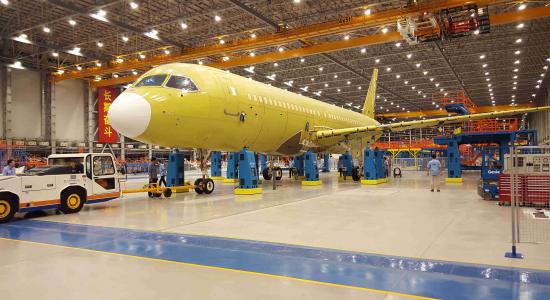
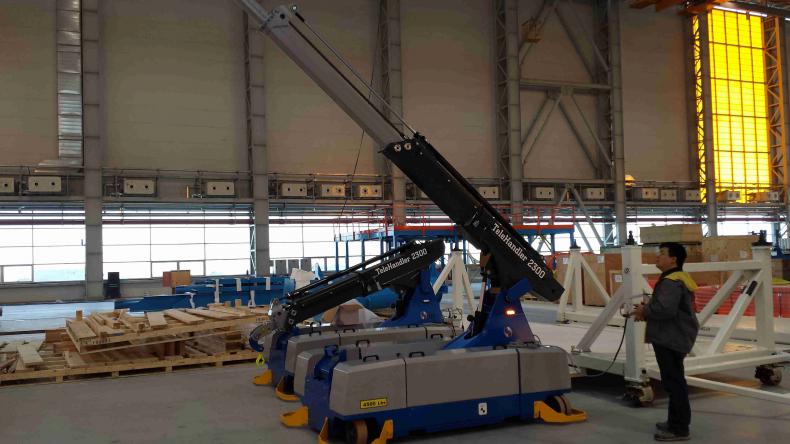
COMAC C919 Telehandlers - Shanghai, China
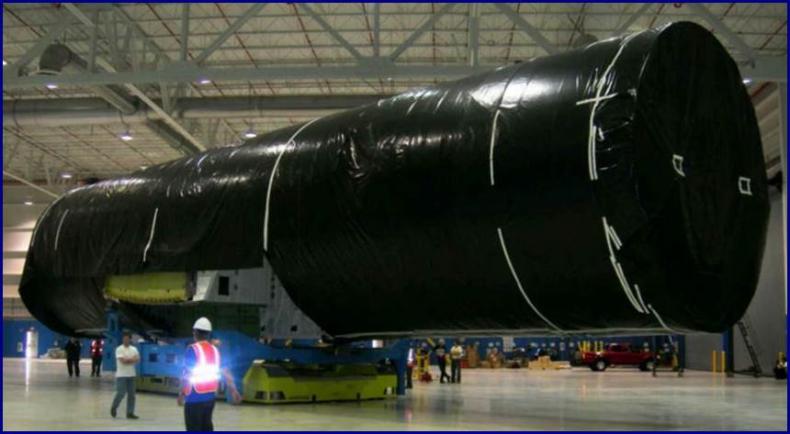
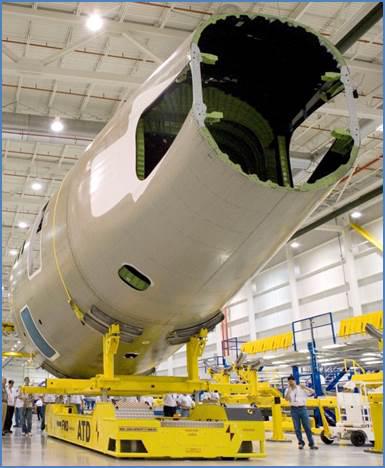
Boeing 787 AFT Body Assembly Line ATDs - Charleston, SC
Automated vehicles that transport, lift, and position the aft fuselage; can operate in tandem.
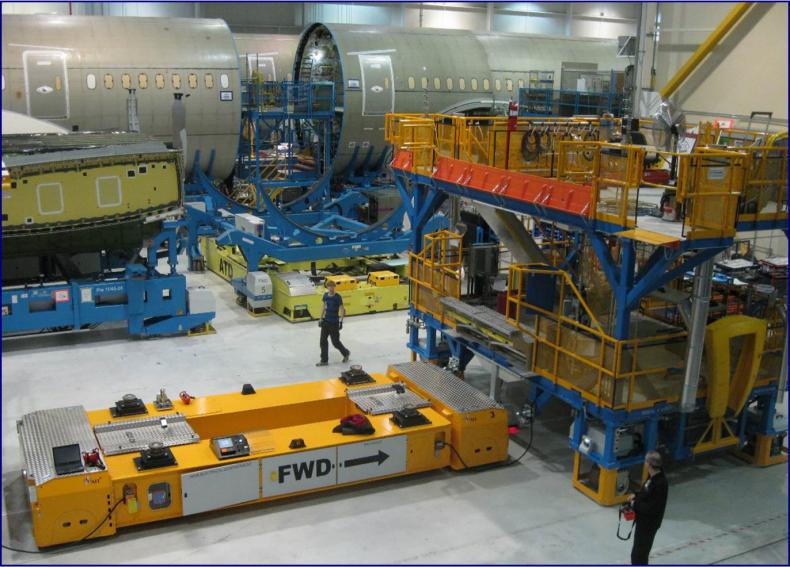
Boeing 787 AFT Body Assembly Line FWD & AFT Platform Drives - Charleston, SC
Automated guidance, tandem operability, and manual drive capability.
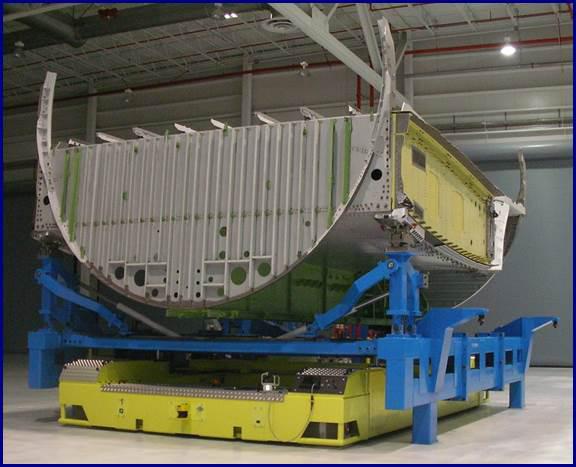
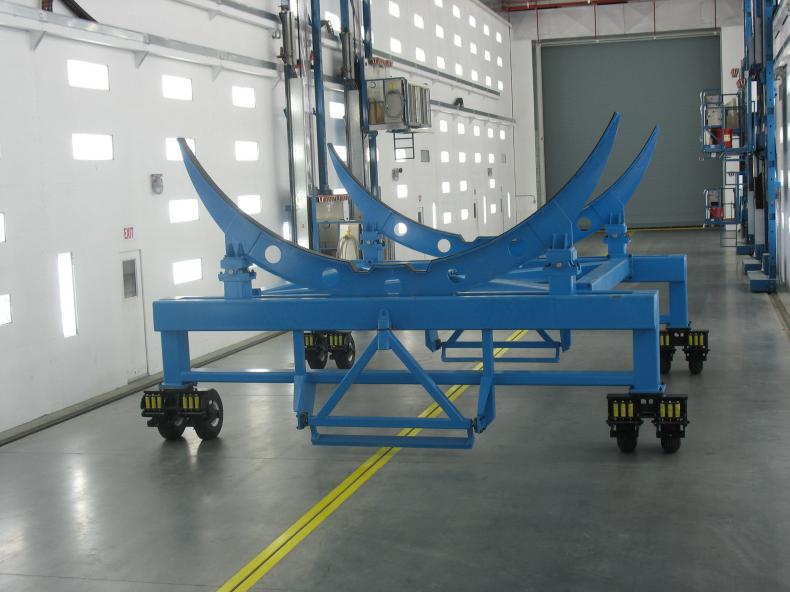
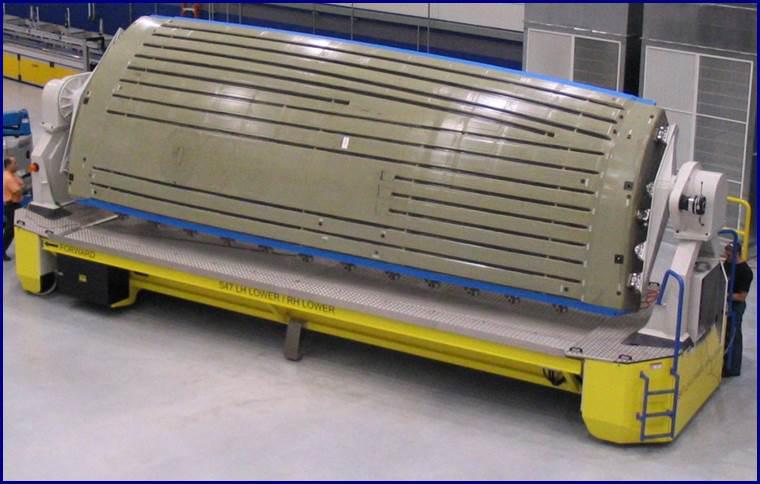
Boeing 787 S47-S48 Segment Carts - Charleston, SC
Carry and transport mandrel segments during cleaning and preparation phases of assembly.
Boeing 787 Mid-Body Join Drive Systems - Charleston, SC
Drive system for TMEs to transport arriving parts and position them in the join cells.
Boeing 787 FBJ Drive Systems - Everett, WA
Drive system for leading edge platforms.
Boeing Project Moving Line Tug - Seattle, WA
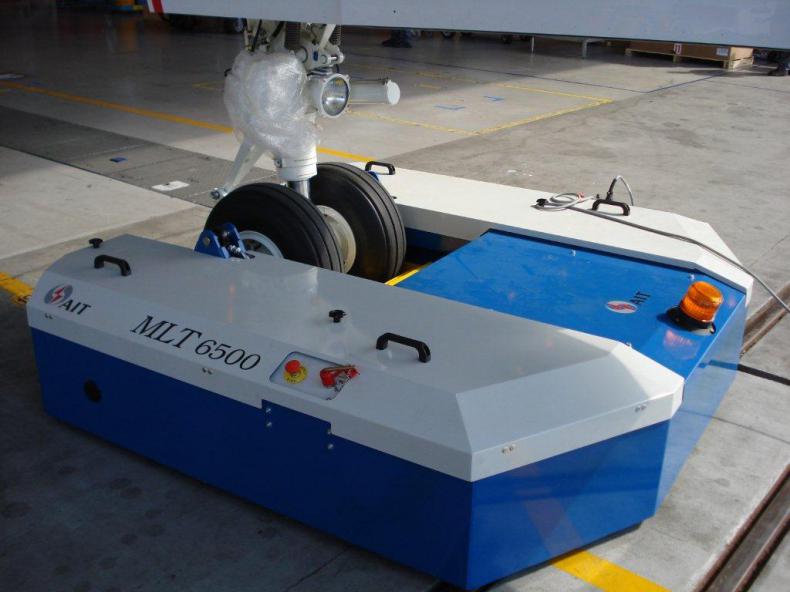
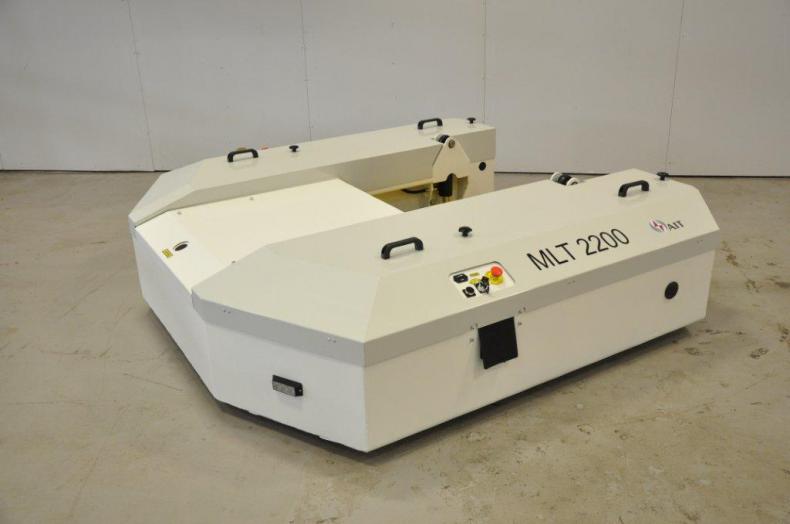
Towbar-less tug that transports and positions aircraft in final assembly line.
Boeing 787 Fabrication Carts - Charleston, SC
Automated vehicles that carry, transport, lift, and position fuselage through all parts of assembly.
Boeing 787 Telehandlers - Charleston, SC
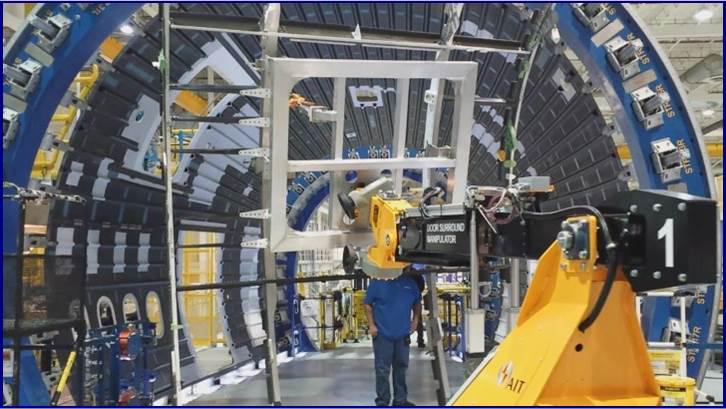
Boeing 787 Door Surround Manipulators - Charleston, SC
For positioning and installation of doors.
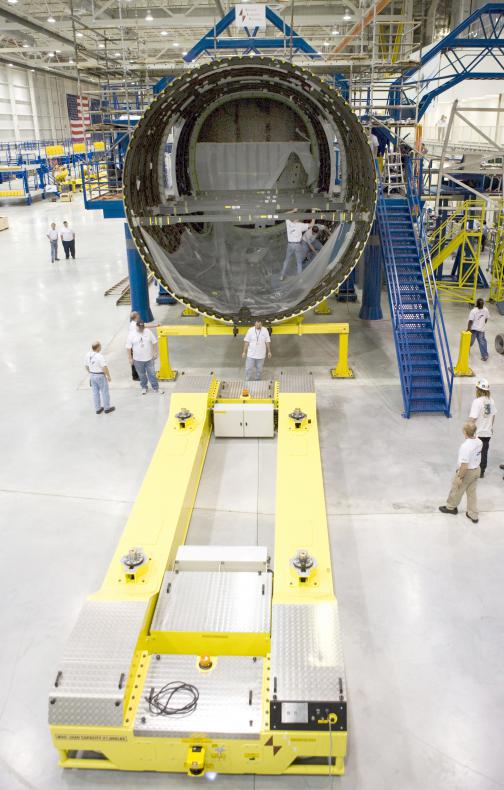
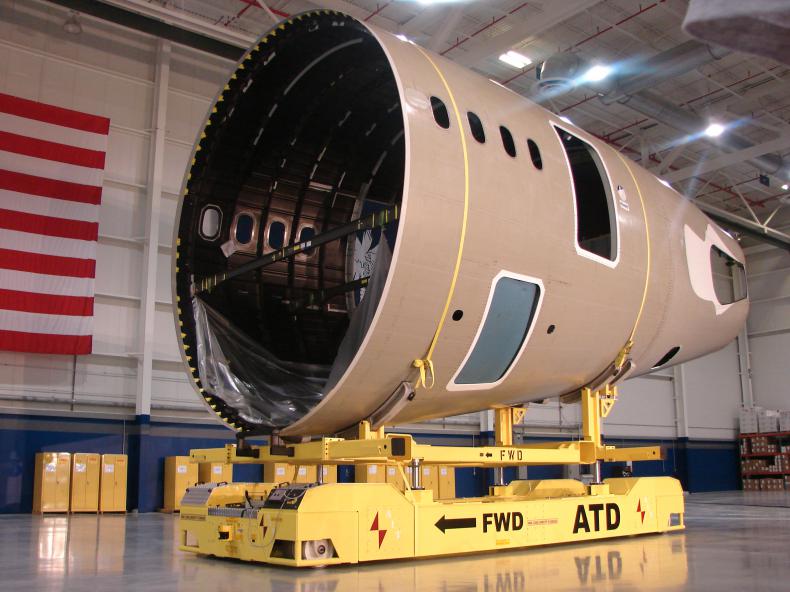
Spirit 787 Section 41 Transport Vehicles - Wichita, KS
Vehicle that carries, transports, lifts, and positions the fwd fuselage. Automated guidance, tandem drive with other vehicles, and manual drive capability.
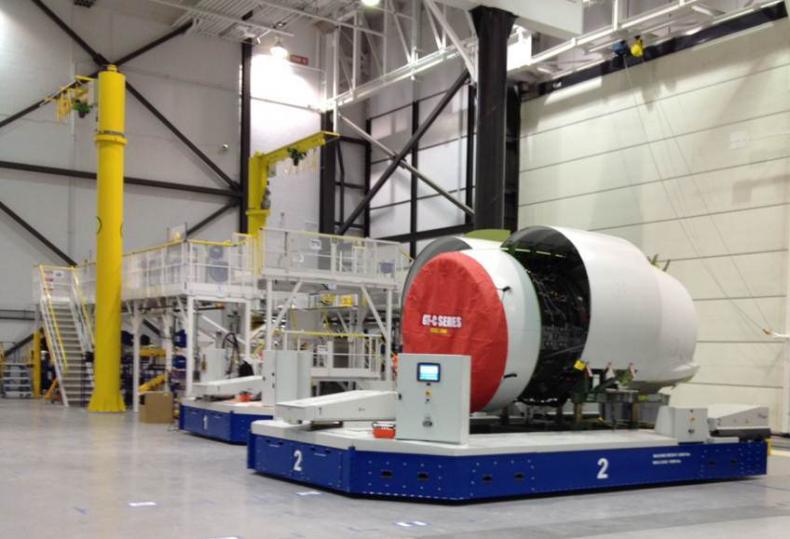
Bombardier CSeries Engine Loader - Mirabel, QC,Canada
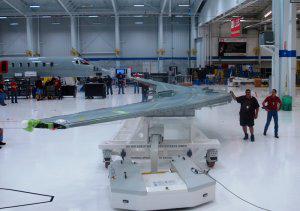
Bombarder CSeries Wing Sled - Mirabel, QC,Canada
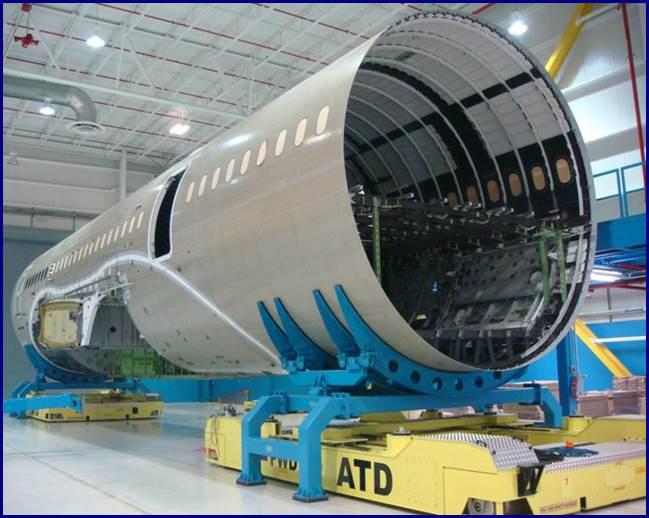
Spirit Airbus A350 ATDs - Kinston, NC
Vehicle that carries, transports, lifts, and positions the fwd fuselage. Automated guidance, tandem drive with other vehicles, and manual drive capability.
Bombardier Learjet 85 Moving Line Tug - Wichita, KS
Towbar-less tug that transports and positions the aircraft in the final assembly line.
Embraer 175/195 Moving Line Tug - Sao Paulo, Brazil
Towbar-less tug that transports and positions the aircraft in the final assembly line.
X'ian AGVs - Tianjin Xingang, China
Vehicle used primarily to transport aircraft fixtures into and out of an autoclave. Operates with auto-guiadance or manual mode as well as in tandem or singularly.
AGV Technical Overview
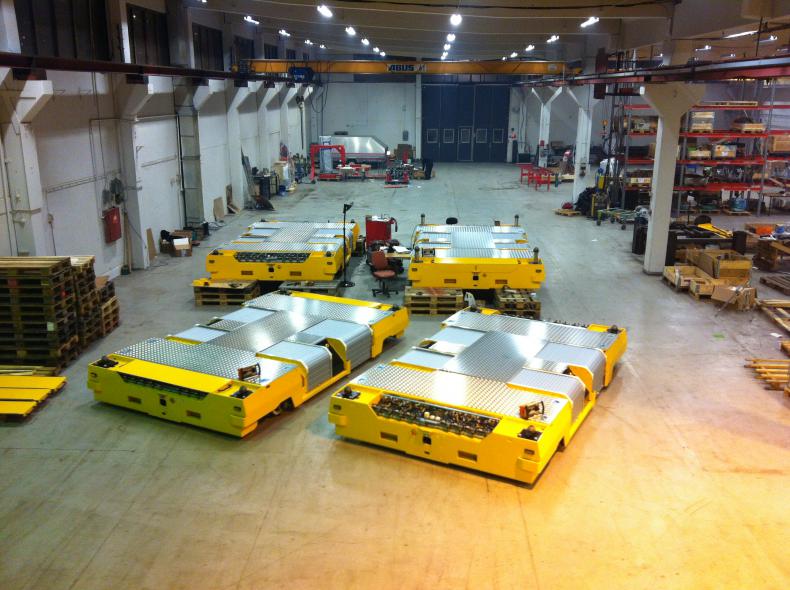
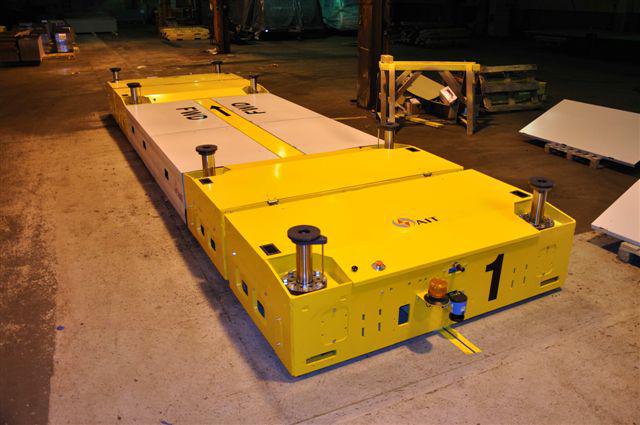
Two frequently used types of AIT AGVs are the complete fuselage transporters and section transporters, with integrated functions for lifting and positioning. These omni-directional vehicles can move their load axially, laterally, or as needed to maneuver safely and efficiently through a facility and into/out of work cells.
For load carrying capacity, each vehicle is equipped with a multi-wheel design with all-wheel synchronized steering.
The transporters can also function in tandem mode, where two AGVs work together as one unit. The vehicle’s steel structure offers the utmost in stable and durable construction, while maintaining flexibility. The chassis is a low picture frame style design containing a wheel system in each corner. This design allows the AGVs to slightly articulate to adapt to deviations in the factory floor.
Drive Modes
What makes the AGVs so flexible is the design of the drive modes, giving our AGVs unrivalled mobility to maximize floor space and reduce the costly labor associated with moving and positioning aircraft components.
Precise Control
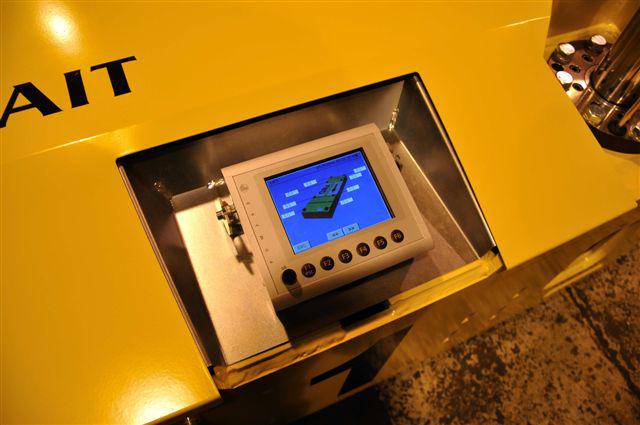
For precise, controlled movements, the AGV is outfitted with an advanced onboard control system, including sensors and cameras, for unparalleled performance. Users can easily maneuver the equipment from either a graphical user interface (GUI) touchscreen or joystick.
Using the GUI touchscreen on the main control panel, the user can make command mode and function changes, such as lifting modes, tandem mode, etc., from a single screen. From the joystick, the user can drive the vehicles. Because of its intuitive design, training a user is an incredibly simple process, which equates to reduced cycle time and fewer errors.
Drive Units
The larger transporters are equipped with twin drive units, each powered by electrical motors: a drive motor that controls the speed and a steering motor that adjusts the wheel angle. All drive units are controlled with the Programmable Logic Controller.
Unlike conventional fixed wheels that can only roll forward and backward, the AIT drive unit can rotate on its own axis and move the machine in any direction. Again, this flexibility results in maximized use of a facility as well as optimum maneuverability in tight spaces.