
 Advanced Integration Technology > Automation & Integration > Drilling Technology
Drilling Technology
From the circumferential Flex Track drilling and fastening machine to the Numerically Controlled Drilling Jig (NCDJ), AIT drilling machines offer robust, scalable, and flexible automated systems for any size aircraft. They are designed and developed specifically to speed the intensive process of drilling thousands of holes - all with incredible accuracy.
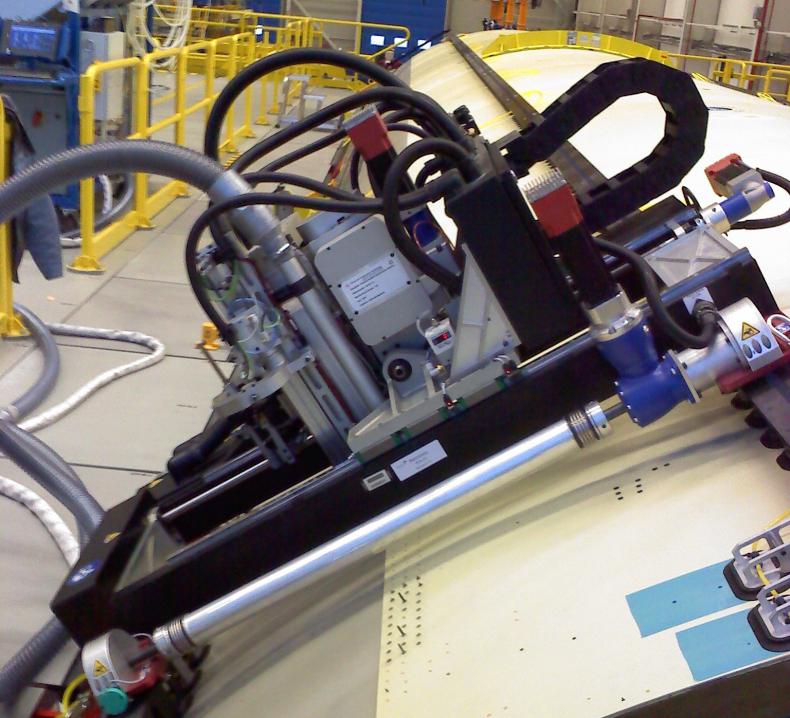
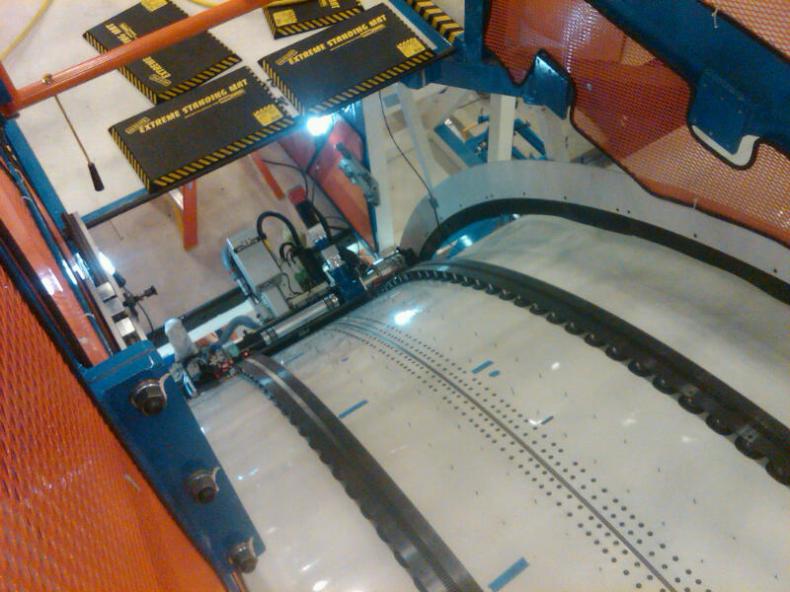
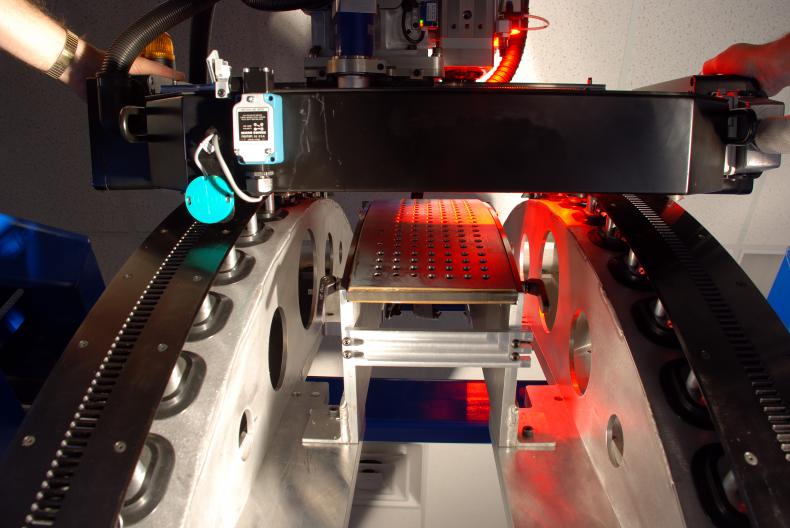
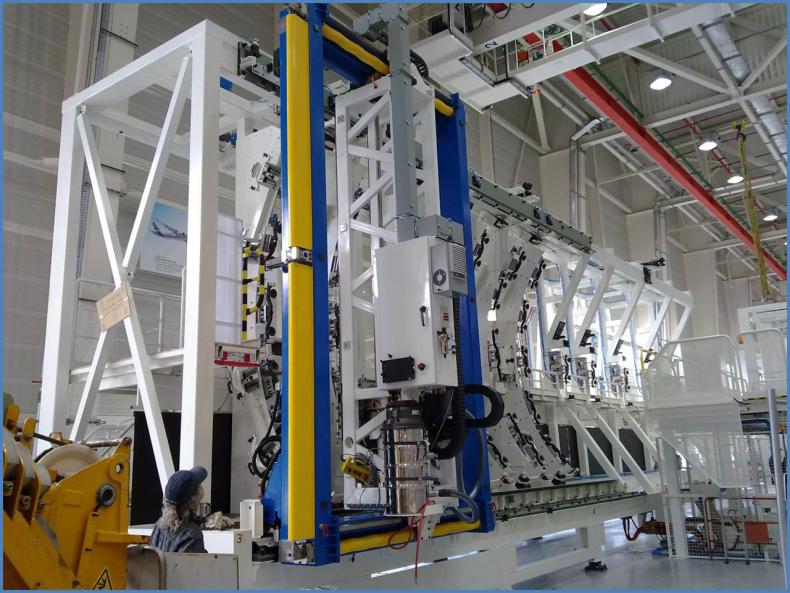
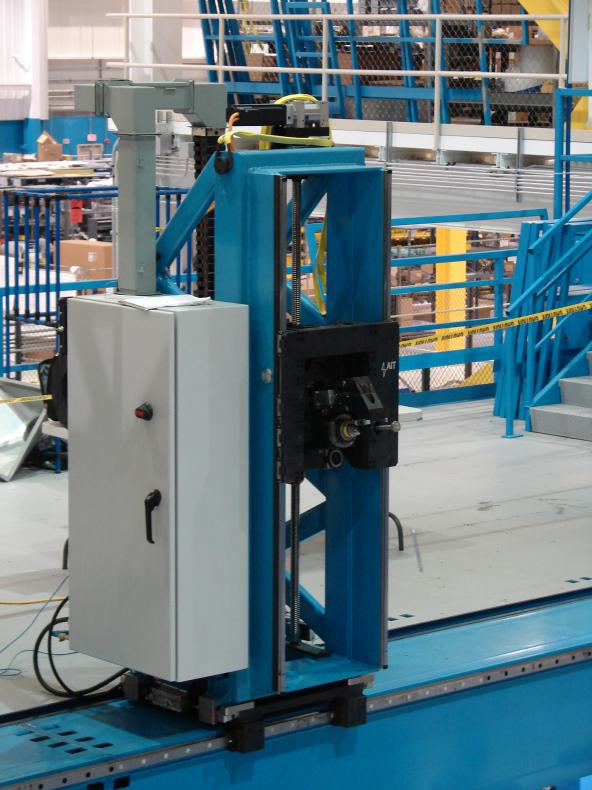
Flex Track Driller with Fastening Technology
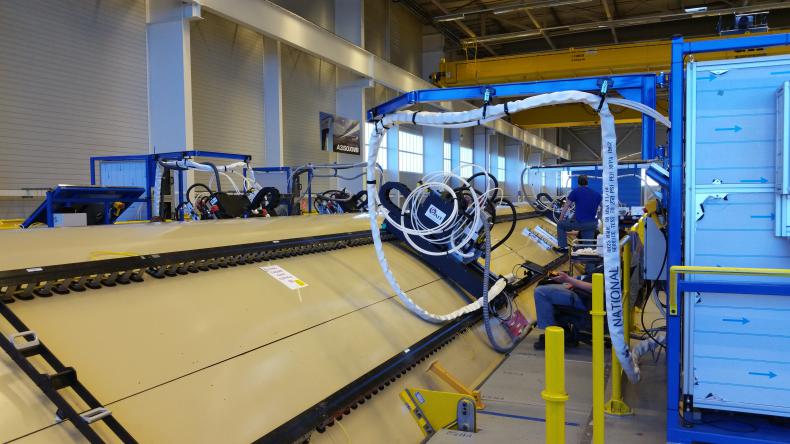
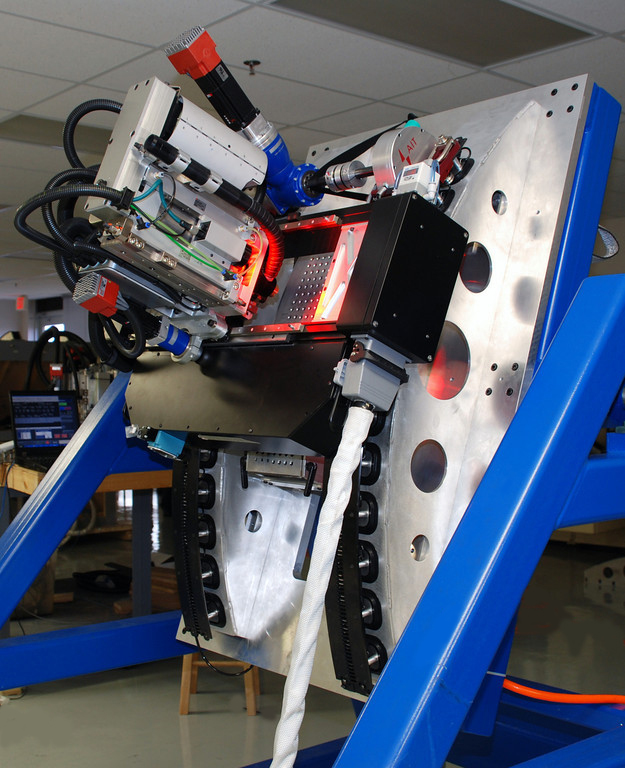
The automated AIT Flex Track system with fastener insertion is able to precisely drill, countersink, feed the fastener, apply sealant, and install the fastener at the point of use. This technology reduces the manual labor involved in previous generations while also improving hole quality. These drilling machines represent the next logical step for Flex Track technology implementation.
Flex Track Circumferential Drilling Machine
 The AIT circumferential drilling machine was manufactured specifically to speed the intensive process of drilling thousands of holes around the aircraft to join fuselage sections – all with incredible accuracy. What once took days can now be accomplished in hours with AIT’s precision-engineered technology.
AIT’s drilling machine was designed using lean manufacturing principles, keeping efficiency in mind. These elements contribute to making it easier to work with, portable, and scalable for any size aircraft.
The Drilling Unit
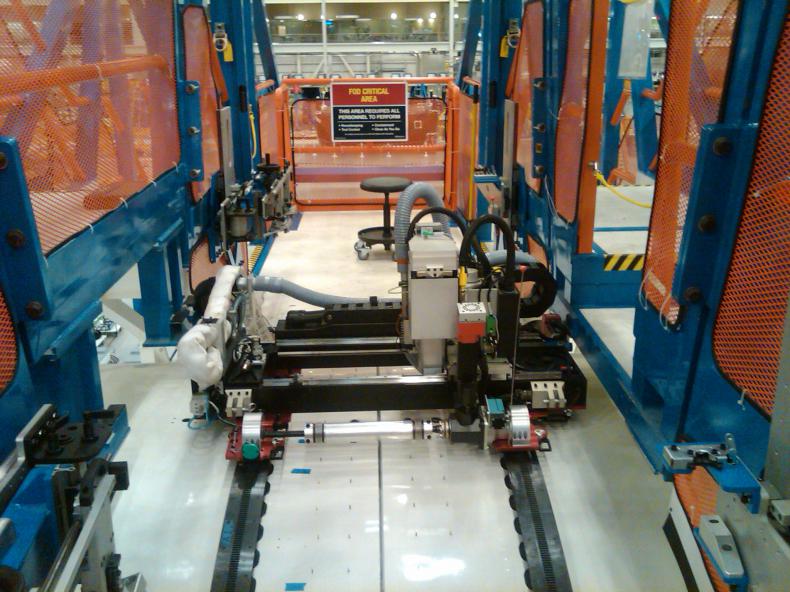
The lightweight unit sits on a dual set of flexible vacuum tracks affixed directly to the plane's fuselage, which conforms to the shape of the airplane. During drilling, the unit rides along the track system, which also stabilizes itself and ensures accurate positioning throughout the entire process. This engineered precision means substantially better quality and reduced rework for our customers -- all equating to less time and money spent overall.
The carriage assembly accurately positions the drilling head in X and Y axes, using servo control closed loop feedback. The drilling head consists of a spindle with an HSK-A32C tool holder interface and an integrated vision system, which performs machine-to-part referencing and executes AIT scan-and-correct vision algorithms. It also offers optional through-the-bit coolant delivery, and a pressure foot that provides part clamp up, and skin position feedback for precise countersink control.
Throughout the drilling process, a single vacuum hose continuously picks up drilling swarf and coolant, maintaining a cleaner and safer work environment.
Onboard Control System
The onboard control system functions as the brains of the machine. The NC part program is fed to the integrated onboard control system, which interprets the program and directs the servo motors where to position the carriage assembly and drilling head. It also provides critical information about the part being drilled, such as RPM, feed rate, clamp force, tool geometry, and part thickness.
User Interface
The user interface of the control system is AIT’s graphical user interface – or GUI, which is delivered to the operator via a pendant touchscreen computer. The intuitive touchscreen computer is inherently easy to use and simplifies the drilling process. By organizing similar control functions onto similar screens, this grouping feature reduces human error and speeds the overall drilling process. Plus, it makes the rampup to train others in its use a much shorter process. Operators don’t even need to be familiar with CNC programs or machines to operate our drilling machine. They are able to get to work sooner with the AIT drilling system – usually within hours.
Advantages
- Lightweight unit for portability, smaller footprint, and cleaner factory environment
- Scalable for any size aircraft
- Onboard control system
- Intuitive GUI for ease of use, fewer human errors, and faster ramp-up
Mobile, Numerically Controlled Drill Jig
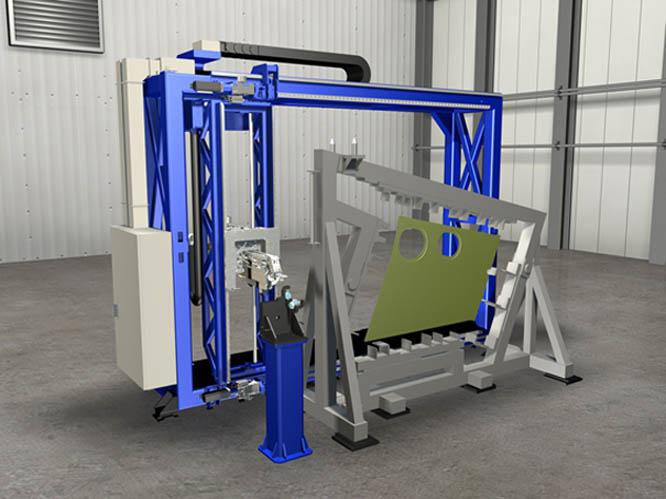
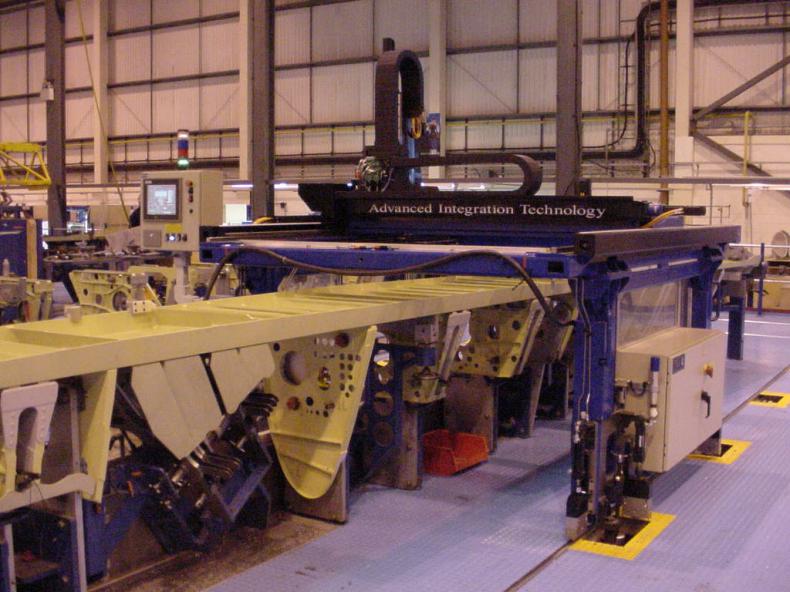
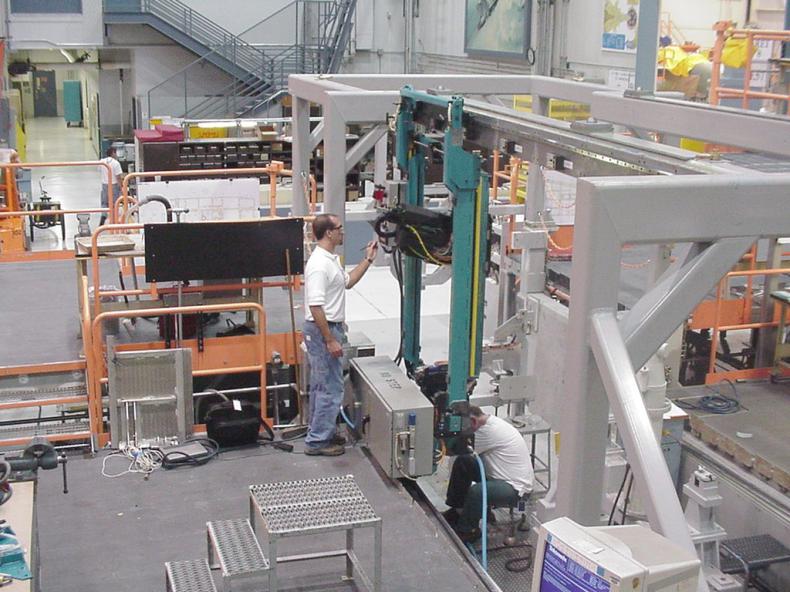
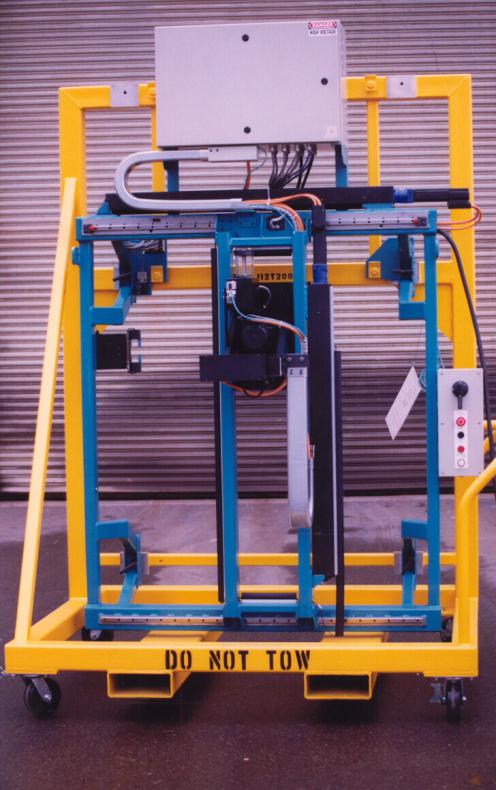
To overcome many of the disadvantages associated with conventional drilling machines, AIT developed and implemented mobile, numerically controlled drilling machines. In fact, a new wing design for the Boeing 767 in the late ‘90s drove the need for AIT to develop its Numerically Controlled Drill Jig (NCDJ).
Historically, drilling fastener holes in large assemblies was accomplished using large machine tools, which were bulky and stationary. Aircraft components had to be delivered to these drillers, creating an inflexible, slower manufacturing process.
Advantages
Many of the advantages of the NCDJ over traditional drilling machines include:
Flexibility - Conforms to various spar configurations regardless of program model or spar hand and can work along entire length of spar
Size - Reduces overall driller size and maximizes work area, while minimizing tooling costs
Ergonomics - Eliminates the need for moving heavy, powered feed drills from hole to hole
Cost Savings - Eliminates the need for fixed drill templates, saving money associated with their design, fabrication and maintenance
AIT NCDJs are small and mobile and possesses extensive computing power to download positions of hole sites and control the positioning of the end effector. The NCDJ conforms to various jig configurations regardless of the program model or position on the wing.
In short, the controller for the NCDJ quickly orients the machine, downloads the hole sites appropriate to the model under construction, and accurately determines the mini-driller's precise location in relation to the work piece.
A graphical user interface (GUI) allows the operator to read the projected position of the hole sites, as downloaded from the Numeric Control Server, off of the GUI and to make ad hoc corrections to the projected hole sites.
Drilling Projects Sample List
Boeing 787 - FBJ Next Generation Flex Track - Everett, WA
3-axis circumferential driller for 40-26 and 40-24
Triumph G7000/8000 - Wing Join Flex Track - Red Oak, TX
4-axis circumferential driller for wing join
Boeing 787 - FBJ Second Line Next Generation Flex Track - Charleston, SC
3-axis circumferential driller for fuselage join
Airbus A350 - Keel Beam NC Driller - Nantes, France
4-axis mobile machines to drill pilot and full-size holes
Spirit A350 XWB - Flex Track with Fastening Technology - Saint-Nazaire, France
Longitudinal drillers to join the upper and forward lower carbon fiber shell fuselage panels (Section 15)
Boeing 787 - FBJ Second Line Next Generation Flex Track - Charleston, SC
4-axis circumferential drillers for forward and aft sections
Hawker Beechcraft 4000 - FBJ Flex Track - Wichita, KS
Circumferential driller with calibration station
Embraer 170/190 - Flex Track - Sao Paulo, Brazil
Circumferential drillers to join fuselage
Boeing 787 - FBJ Flex Track - Everett, WA
4-axis circumferential drillers for forward and aft sections of the aircraft in multiple thicknesses of CFRP & CFRP/titanium
Global Aeronautica 787 - Mid-Body Join Flex Track & Side of Body Driller - Charleston, SC
Four 4-axis circumferential drillers for forward and aft sections of the aircraft; three 4-axis SOB of Section 44 to Section 45/11 mate
Boeing F/A-18E/F - Outer Wing Driller - St. Louis, MO
Automatically drill, countersink, and ream holes in multi-material stacks composed of carbon fiber, aluminum, and titanium in various combinations of each material and thickness
Airbus A340 - Leading Edge NC Driller - Bristol, England
Mobile NCDJ to drill and ream leading edge assembly of up to 1" diameter holes through aluminum-titanium material stacks on any of four fixed assembly jigs
Boeing F/A-18E/F - Forward Fuselage NC Driller - St. Louis, MO
Mobile 3- and 5-axis NCDJs to automatically drill outer skins and floors of the F/A-18 E/F forward fuselage
Boeing 767 - Stage 2 Spar NCDJ - Everett, WA
Mobile machines that drill pilot holes and full-size holes through rib posts, stiffeners, and the main spar